
Best Time to Visit Sydney for Hotel Prices: A Month-by-Month Guide
Every season is a great time to visit Sydney — there are lively peak times, and a quietly brilliant window where the weather is still lovely and hotel rates are at their best value. If your dates are flexible, choosing the right month is the single easiest way to cut the cost of the whole trip.
This guide walks through the year season by season — what each stretch of the calendar actually feels like on the ground — then gets specific about when rooms are cheapest, which nights of the week to favour, and how many days you really need to do the city justice.
The short answer for the impatient
Sydney hotel prices are generally at their lowest from May to July. June, September and October are commonly cited as the best-value months overall, balancing mild weather with softer rates. The expensive stretch runs from mid-December to the end of January, when school holidays and the world-famous harbour New Year collide. If you want the best of both worlds, aim for late autumn through winter, watch the Sydney hotel deals page for direct offers, and avoid Friday nights where you can — more on that below. Every month has its charm — Sydney in January is glorious — it simply means the same holiday carries very different price tags depending on where it lands on the calendar.
Summer (December–February): the postcard, at postcard prices
Summer is the Sydney of the brochures — long beach days, warm evenings, harbour pools and outdoor cinema. It is glorious, and everyone knows it: this is when the city is at its liveliest and, from mid-December to the end of January, in highest demand. Days can be genuinely hot, and the beaches are packed. Come in summer if the beach is the point of the trip and book well ahead; plan your budget ahead, as this is the most popular season of the year. If New Year's Eve on the harbour is the dream, plan accommodation months in advance — it is one of the most in-demand hotel nights anywhere.
Autumn (March–May): the local favourite
Ask Sydneysiders their favourite season and many will say autumn. The heat softens, the water is still warm enough for swimming well into the season, and the light over the harbour turns golden. Prices begin to ease after the summer surge, and by May you are entering the value window with weather most of the world would call a fine summer's day. For harbour walks, coastal paths and cafe-hopping through the inner west, March to May is hard to fault.
Winter (June–August): the value season
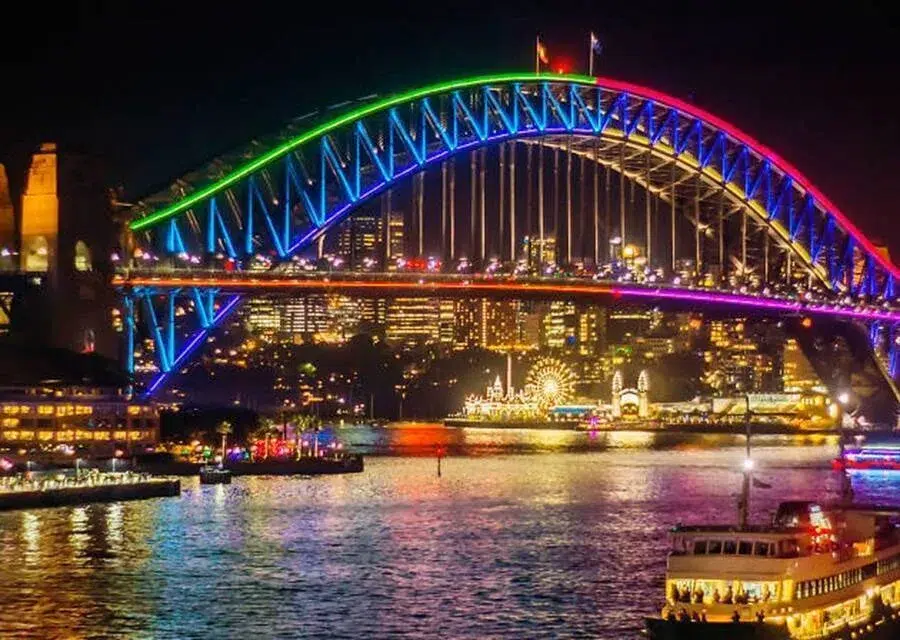
Here is Sydney's best-kept secret: winter is mild. This is not a European winter — it is crisp mornings, plenty of blue-sky days, and a city that is entirely usable outdoors with a jacket. It is also when hotel prices are generally at their lowest, with the May–July window the cheapest of the year and June repeatedly cited as a standout value month. Winter is also when Vivid Sydney transforms the harbour into a canvas of light — a spectacular free evening out, though a demand spike worth noting when you pick your exact dates. Museums, galleries, food neighbourhoods and clifftop walks are all at their uncrowded best. If your priority is seeing Sydney well while spending less, winter is the answer.
Spring (September–November): blossoms and shoulder-season sense
Spring brings the city back to life — jacaranda trees begin their purple show late in the season, the water warms up again, and the events calendar fills. September and October are commonly cited value months: past the depths of winter pricing but still well short of summer's peaks, with weather that suits everything from beach mornings to Blue Mountains day trips. By late November the summer surge is warming up, so earlier in spring is the smarter buy.
A quick month-by-month cheat sheet
- January: hot, festive and lively — the tail of peak pricing runs to the end of the month.
- February: still summery, slightly calmer once school terms resume.
- March–April: golden autumn weather, warm water, prices beginning to ease.
- May: the value window opens — mild days, relaxed streets, softer rates.
- June: a standout value month — winter pricing while the harbour glows with festival light.
- July: winter, Sydney-style: crisp, often sunny, and great value to stay.
- August: late winter, still quiet and still good value before spring stirs.
- September–October: spring value months — warming days with rates still well short of summer's.
- November: jacaranda season and rising demand as summer approaches.
- December: lovely and lively — and from mid-month, the festive peak season begins.
Events move prices more than seasons do
Whatever month you choose, the sharpest price spikes are event-driven: a stadium concert, a major festival weekend or a big sporting fixture can lift rates across the whole city for a few days. Before you commit, cross-check your dates against the Sydney events calendar. If you are coming for the event, book early and stay somewhere with fast transport to the venue rather than in the middle of the surge. If you are not, shifting your visit by even a few days can restore normal pricing.
The nights you book matter as much as the month
Two patterns are worth building your dates around. First, Friday nights average the highest room rates in Australia, and Sunday nights the lowest — so a Sunday-to-Thursday stay buys the same rooms at their cheapest. Second, timing your booking: most Australian hotel bookings are made about a month ahead, and a large share are made last-minute, within a week of arrival. Booking direct with the hotel — rather than through a commission-charging platform — is the one tactic that works at every point on that curve. A midweek winter visit, booked direct, is about the cheapest way to sleep in this city, and it pairs beautifully with a Sydney weekend getaway extended by a couple of quiet weeknights.
How many days do you need in Sydney?
A simple answer by trip type:
- Two to three days: the icons — Opera House, Harbour Bridge, The Rocks, a ferry ride and one beach. Doable, but you will leave wanting more.
- Four to five days: the sweet spot for a first visit. The icons plus a proper beach day, a neighbourhood day in the inner west, and an evening of live music or theatre.
- A week or more: adds day trips — the Blue Mountains by train, further beaches, and time to stop rushing. Longer stays also reward a cheaper base, since every night of savings multiplies.
For itinerary raw material, our guide to things to do in Sydney covers the classics alongside the local favourites loved by Sydneysiders.
Putting it together
Come in the May–July window — or June, September or October — favour Sunday-to-Thursday nights, check the events calendar before locking anything in, and stay somewhere connected by fast trains rather than paying harbour-postcode premiums. From our motel in Summer Hill, the station is a 400 m walk and Central is about 8 minutes away by train, with ensuite rooms from $145 a night Monday to Thursday year-round, free secure parking and free unlimited WiFi. Whichever month wins, you will get our best rate when you book direct — and with 24-hour reception, even a late-night winter arrival starts the trip gently.